Big and Tall Suits: A Tailor's Guide From Shoulder to Hem
Shoulder line, jacket length, trouser cut and cloth: what big and tall men should look for in a suit, and exactly what to ask the tailor to change.
6 min read
A Suit Speaks in Proportions
A good suit gets to the room a half second before you do. For a big and tall man, that is something to enjoy. A broad chest and a commanding frame, cut properly, make one of the most impressive pictures in classic tailoring. The work is not about fitting your body into a pattern. It is about building the pattern around your body.
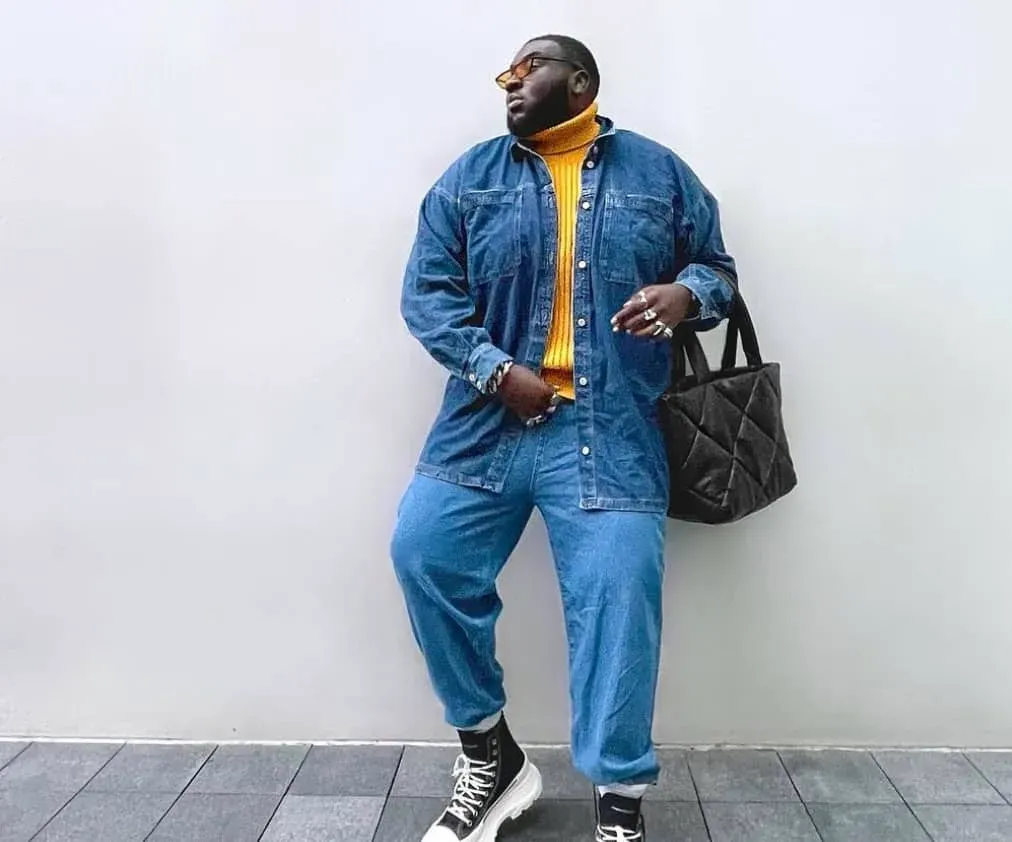
The season is on your side. StyleRave’s reading of 2026 menswear puts wide-leg trousers and relaxed cuts firmly in the mainstream, with proportion taking over from logos as the real sign that someone knows what he is doing. Volume, handled with intent, has become a signature.
What follows works both on the shop floor and in front of a tailor’s mirror. Take it in order: shoulder, jacket, trousers, cloth.
Begin at the Shoulder
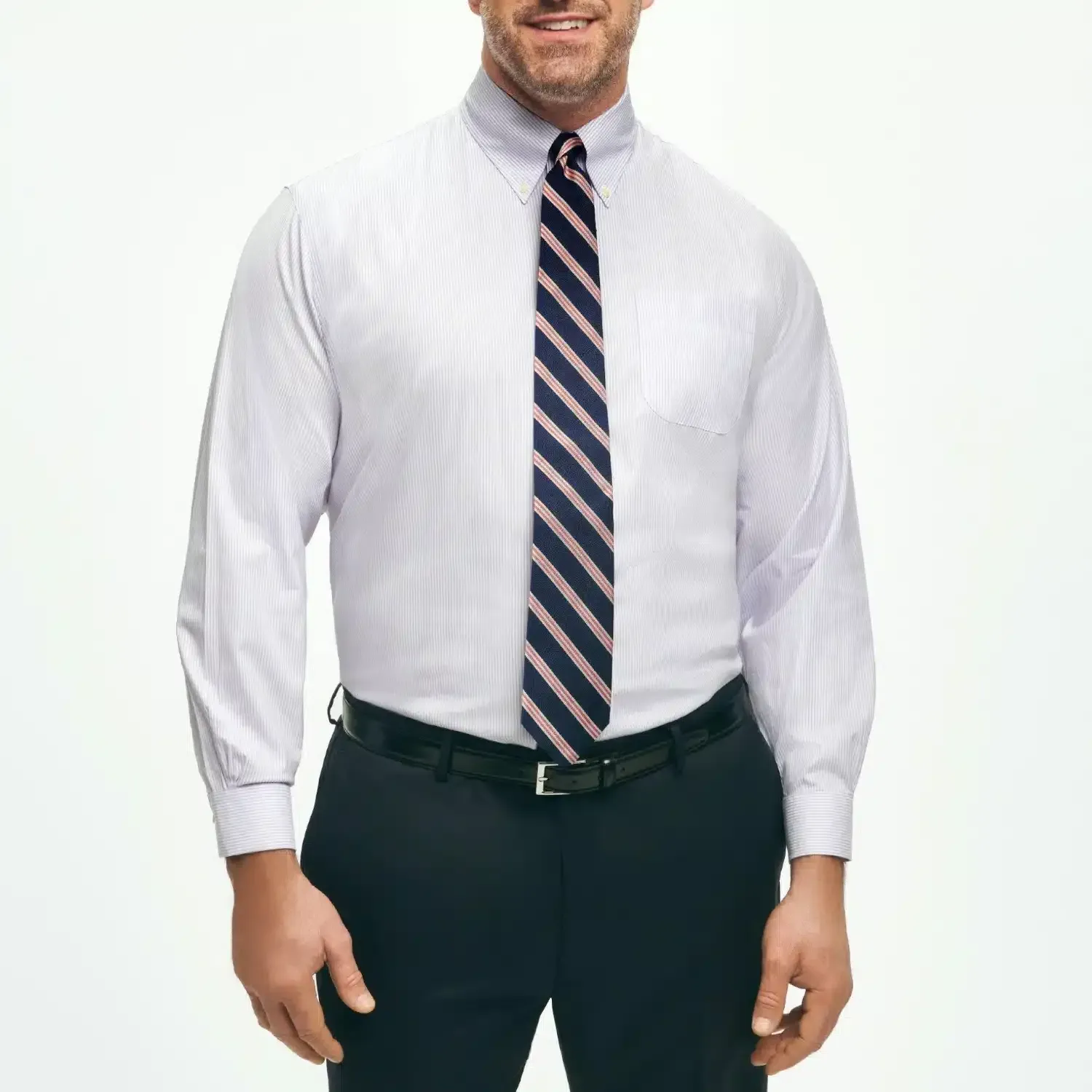
The first thing to check in any jacket is the line of the shoulder. Gentleman’s Gazette sets a precise standard: the jacket should end only slightly beyond your own shoulder bone, and an inch past it is already too far. If your shoulder presses out into the sleeve head, or the cloth wrinkles across the top, the jacket is too small. If the seam droops, it is too big.
Be wary of padding, too. The thick shoulder wadding common in ready-to-wear adds bulk to a frame that needs no help looking strong. Real Men Real Style makes the same case, recommending close-fitting, largely unpadded shoulders. A natural line lets your build do the talking.
So shop in this order. Find the size that gets the shoulder right, then hand the rest to a tailor. Taking in a waist or shortening a sleeve is everyday work at the alterations bench, whereas the shoulder is the hardest part of a jacket to change.
The Jacket: Buttons, Lapels, Length
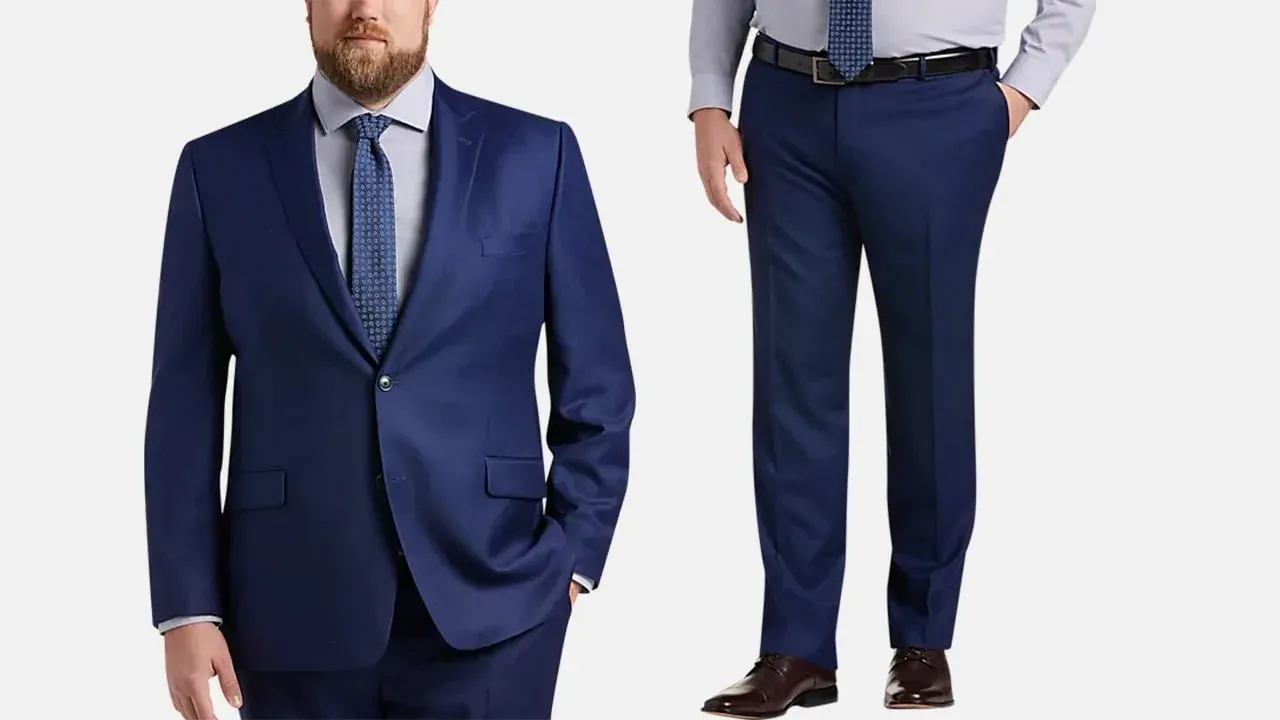
Horizontal pull lines across the chest or stomach tell you the jacket is tight. A handful of spare fabric and a tent-like hang tell you the opposite. You are looking for the point between them: a button that closes without strain and a body that follows yours.
Single-breasted jackets find that balance most readily. Two buttons or three will both serve, but what matters most is that the buttoning point sits close to your natural waist. A lower stance opens a deep, elegant V down the chest. Double-breasted styles have a habit of gapping at the front, so they are better saved for later in the wardrobe.
Think of the details in scale. Notch lapels of about 3.5 inches, neither skinny nor exaggerated, look settled on a large frame. Real Men Real Style points out that standard pockets and lapels can read as undersized on a broad body, and that observation explains a lot. Slightly larger buttons and pocket flaps, with a touch more space between the buttons, make the whole jacket feel drawn for you rather than scaled up.
At the back, the jacket should be long enough to cover the curve of the seat. Remember that length also fixes where the pockets and buttonholes sit, and those cannot be moved later. A jacket that is right in the shoulder but wrong in length will not always be saved by shortening it.
On vents, the sources converge on one thing: skip the single center vent. Gentleman’s Gazette notes its tendency to gape, while Real Men Real Style praises the clean drape of double vents. If you want the back of your jacket to stay composed all day, go with side vents.
Sleeves come last. They should end at the base of the wrist with a quarter to three quarters of an inch of shirt cuff on show. That small strip of white is one of the most refined details in the entire outfit.
The Trousers: Waist, Pleats, Break
Half the suit is the trouser, and it often gets half the attention. A cut that sits at your natural waist drapes smoothly from the front and keeps your shirt from showing below the buttoned jacket. Two fingers should slide comfortably into the waistband, and no more.
Pleats, for a big man, are not nostalgia. They are room to move, particularly when you sit, and the wider trouser silhouette of the moment has brought them back into conversation. The one test: they should stay closed when you stand. If they spread open, the thigh is too tight and the size or cut needs rethinking.
Both Gentleman’s Gazette and Real Men Real Style favor suspenders over a belt. They carry the trouser from the shoulders, stop it sliding through the day and leave a clean line under the jacket. They are also, frankly, a pleasure.
As for the hem, the leg should fall just onto the top of the shoe. Any shorter and the trousers look as though they shrank; any longer and the look turns careless. Bring the shoes you will actually wear to the fitting.
Cloth, Color and Pattern
You want two qualities at once from your cloth: breathability and some weight. Gentleman’s Gazette explains that heavier fabrics drape better and that an open weave keeps air moving, so a suit can hang cleanly and still feel fine at the end of a long day. Ask your tailor for cloth that does both, and always drape a sample over your shoulder in front of the mirror.
Navy and charcoal remain the two most dependable names in the book, deep and authoritative and at home from the boardroom to a late dinner. If you want pattern, mind the scale. Wide chalk stripes, bold windowpanes and horizontal lines pull the eye toward the cloth, while a fine pinstripe or a glen check with little or no overplaid brings attention back to you. And if you are considering a third piece, a dark single-breasted waistcoat gives the whole look a strong, finished unity.
Talking to Your Tailor
Skip the vague “just tidy it up” and walk in with a list: sleeve length, trouser hem, waistband if needed, and the side lines of the jacket. Wear your usual shirt and shoes, and load your pockets as you would on any workday so the fitting reflects real life. Then sit, reach and walk before anyone picks up the chalk.
When off-the-rack simply will not reach your shoulders or waist, made-to-measure is a real option and worth pricing. Ready-to-wear has also improved: Effortless Gent’s roundup notes Thorn & Co. offering suiting up to 62L. Patterns still vary from one label to the next, so trust your measurements over the number on the ticket.
Style Tip: If you are buying one suit, make it navy, single-breasted with two buttons and side vents. Find the size that nails the shoulder, then give your tailor three jobs only: sleeve length, side lines, and a hem set to the shoes you will wear. Finish with a white shirt and a plain white pocket square, and people will notice your presence well before they notice your suit.