Winter Beard Care: How to Keep It Soft When the Cold Sets In
Dry air turns a good beard wiry and leaves the skin below it tight. A refined winter routine for big and tall men: washing, oil, balm, combing and protection.
6 min read

The Season That Tests a Good Beard
A well-kept beard does what the best tailoring does: it frames, it finishes, it says something before you do. On a big and tall man it answers a broad shoulder line and an easy, confident stance with a sense of proportion, and paired with a wool overcoat or a heavy roll-neck it starts to look like part of the outfit.
Winter is where that signature gets tested. Facial hair is porous, taking on and giving up moisture according to its surroundings. Cold air outdoors and heated air indoors are both low in humidity, so the hair dries out, stiffens and turns brittle at the tips, while the skin beneath it picks up the same thirst. Then comes the itch every bearded man knows.
There is good news in the small print, too. The Ohio State University Wexner Medical Center points out that a beard can offer the skin a degree of shelter from wind, cold and UV rays. Your beard is earning its keep this season. All it asks in return is a little consistent attention.
Washing: Smarter, Not Harder
The first rule of winter beard care is not to wear the beard out in the name of cleanliness. Regular soap and frequent shampooing take away the natural oils that keep hair and skin comfortable. How often, then? The experts come at it from slightly different angles. The American Academy of Dermatology (AAD) suggests washing the face and beard daily with a gentle cleanser suited to your skin type. Ohio State talks about washing the face twice a day, but shampooing the beard around twice a week. Reuzel, the barbering brand, lands on two or three washes a week in winter, with a plain water rinse on the days between.
Read together, these make sense as two separate jobs: a light daily cleanse and a deeper weekly wash. Your face and beard can meet a gentle cleanser every day, while proper shampoo is best saved for two or three days a week. If your skin starts feeling tight, ease off further.
Choose the cleanser by skin type. The AAD’s breakdown runs like this: a hydrating, fragrance-free formula for dry skin; a creamy, soap-free, fragrance-free one for sensitive skin; a non-comedogenic cleanser for normal skin; and a gel with salicylic or glycolic acid for oily or acne-prone skin. Keep the water lukewarm, work the product in with small circles, rinse thoroughly, and pat dry with a clean towel rather than rubbing. Leave the skin very slightly damp, because the next step depends on it.
Oil, Balm, Cream: Your Beard’s Winter Coat
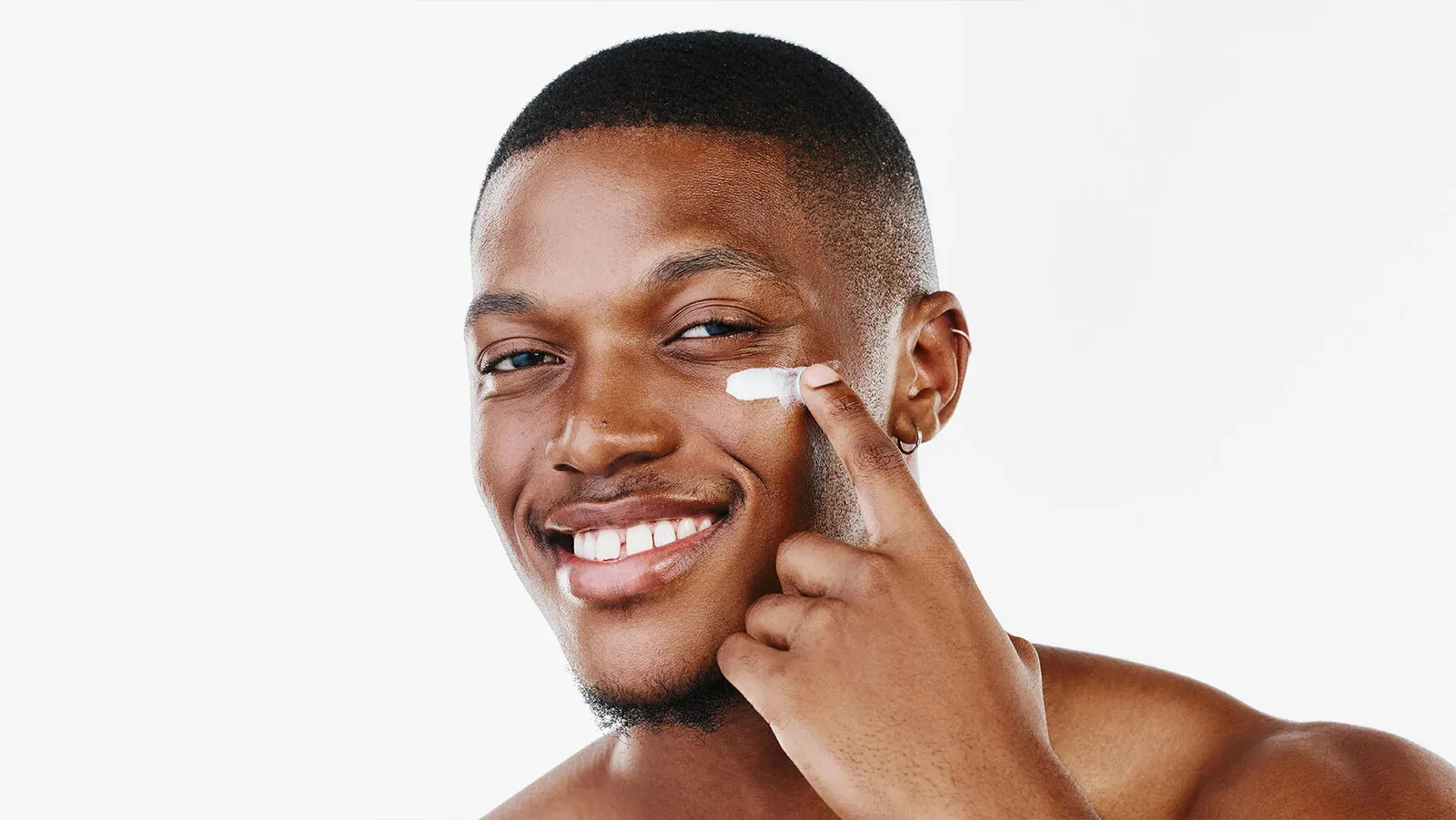
Moisturize right after washing, while skin and hair still hold a little water. Do it even if your skin runs oily. According to the AAD, moisturizing softens both skin and hair and cuts down on the dryness and flaking that make a beard feel prickly.
Again, skin type decides. Beard oil suits normal to dry skin, beard conditioner suits acne-prone skin, and a fragrance-free, non-comedogenic moisturizer suits sensitive skin. Go easy on the quantity. Too much leaves a greasy shine, and you can always add a touch more.
If your beard is long or coarse, consider a second layer. Reuzel’s winter formula is simple: oil first, balm on top. The oil delivers moisture, the balm seals it in and gives stray hairs a light hold. It is the same logic as dressing for the cold, with a fine layer underneath and a protective one outside. In the brand’s guide, Leen Bergman, co-founder of Schorem Barbershop in Rotterdam, names over-washing and skipping oil as the classic winter mistake. If you spend long hours in heated rooms, a second, lighter application in the evening is worth trying.
For those who like a starting point on the shelf, InsideHook’s seasonal guide names Le Labo Beard Oil and Jack Black Leave It In Hair & Beard Balm, while Gear Patrol’s winter beard roundup picks Reuzel Beard Balm for both conditioning and shape. Even so, the best product is the one your skin agrees with, so pay attention to how a new scent behaves on your face.
Comb, Scissors and a Little Discipline
The most satisfying part of the routine is those few minutes at the mirror. The AAD recommends combing every day: it spreads product evenly, works out tangles, sets the shape and acts as a guide when trimming. All of that is easier while the beard is damp.
Scarves, sweaters and coat collars can also leave a winter beard full of static. Reuzel’s practical answer is to keep it hydrated and to swap plastic for a wooden or anti-static comb. It is a tiny change, and a welcome one on mornings when flyaways are misbehaving above your collar.
Before trimming, apply a shaving oil, cream or gel to limit irritation. The AAD favors an electric razor, with scissors for longer beards, and barber Jovan Figueroa tells Gear Patrol he goes after split ends and flyaways with a good pair of scissors. If you clean up your neckline with a blade, do it at the end of a shower or straight after, go with the grain, rinse after each stroke, and change the blade every five to seven shaves. Moisturize the shaved area immediately afterward.
One small habit to drop: stroking your beard through the day. Satisfying as it is, your hands carry dirt and germs that end up on the skin below.
Look After the Skin Underneath
A beard is only as comfortable as the skin it grows from. A gentle scrub once or twice a week clears away dead skin, and it is especially useful during the stubble stage if you are prone to ingrown hairs. Figueroa adds a useful detail: a fine-grained product makes its way through the beard to the skin rather than sitting on top of the hair. Stay gentle near the skin, and always moisturize afterward.
While you are still at stubble, the AAD suggests a moisturizer with SPF 30 or higher suited to your skin type. Whatever the beard does not cover, including the cheekbones and forehead, still sees winter sun.
If redness, flaking or itching under the beard persists despite a steady routine, stop hunting for the answer in the grooming aisle and see a dermatologist. Not all flaking is simple dryness, and a specialist is the right person to tell the difference.
Protection, Outdoors and In
Outside, the most elegant protection is something you are already wearing. In harsh weather, pull your scarf or neck gaiter up over the beard, since wind and cold can dry the hair out and lead to breakage. Give it a quick brush once you are indoors so that any matting from the fabric does not settle in.
At home, think about the air itself. To take the edge off drying indoor heat, the AAD recommends a cool-mist humidifier in the bedroom. Both your beard and the skin under it will appreciate it.
Style Tip: Slip a small wooden comb into the inside pocket of your overcoat, and wrap your scarf high enough to cover the lower line of your beard instead of only circling your neck. A few drops of oil after the morning shower, a little balm on top and a few passes of the comb when you come in from the cold make for a short ritual. Set against a dark coat and a soft scarf, it brings your beard forward as the strongest accessory of the season.