Plus-Size Winter Coats: How to Choose, From Shoulder to Hem
From shoulder seams to fabric weight, hem length to climate: what to check when choosing a plus-size winter coat you will wear for years.
5 min read
The Most Visible Thing You Own
All winter, your coat is the first thing anyone sees. What you wear beneath it often stays hidden until you are through the door, but your coat speaks for you on the street, at the office and on the way into a party. Time spent finding the right one is among the smartest investments you can make in your wardrobe.
Choosing one in plus sizes does take extra care. The Curvy Fashionista’s outerwear guide, updated in May 2026, points out that many brands stop outerwear at 2X even when they offer extended sizes elsewhere. When the choice narrows, knowing exactly what to look for becomes all the more valuable.
This guide brings together what to check, in order, whether you are in a fitting room or shopping online: shoulders, chest, length, cut and fabric.
It All Starts at the Shoulder
The shoulder seam is the first thing to check. According to the guide, it should sit at or very near your shoulder point, even on an oversized coat. That detail is exactly what makes oversized look deliberate: the volume stays in the body while the shoulder holds its line.
A tight shoulder restricts movement, especially in a puffer. If you struggle to lift your arm or sling a bag over your shoulder, the guide suggests sizing up to suit the shoulder. Once that fits, most other issues can be solved.
Try this quick test in the fitting room. Button the coat, reach both arms forward, then lift them overhead. If you feel the back pulling or pressure across the shoulders, that coat was not cut with you in mind.
Chest and Pattern: Read the Cut, Not the Label
Not every plus-size coat was designed for a plus-size body. The guide favors coats cut from a plus-specific pattern over those simply graded up from a straight-size one. A label will not tell you the difference, but a few details will.
Look for:
- A longer back length
- More room in the upper arm
- Deeper armholes
- A front closure that lies flat across a fuller chest
That last point matters especially in a trench. A generous button band stays flat across the bust without gaping. If you can see space opening between the buttons, the fabric is straining.
If a coat fits your shoulders and chest but feels loose elsewhere, do not worry. A tailor can take in the side seams with ease. So choose for the upper body first and leave the rest to the alterations shop.
Which Length Is Right?
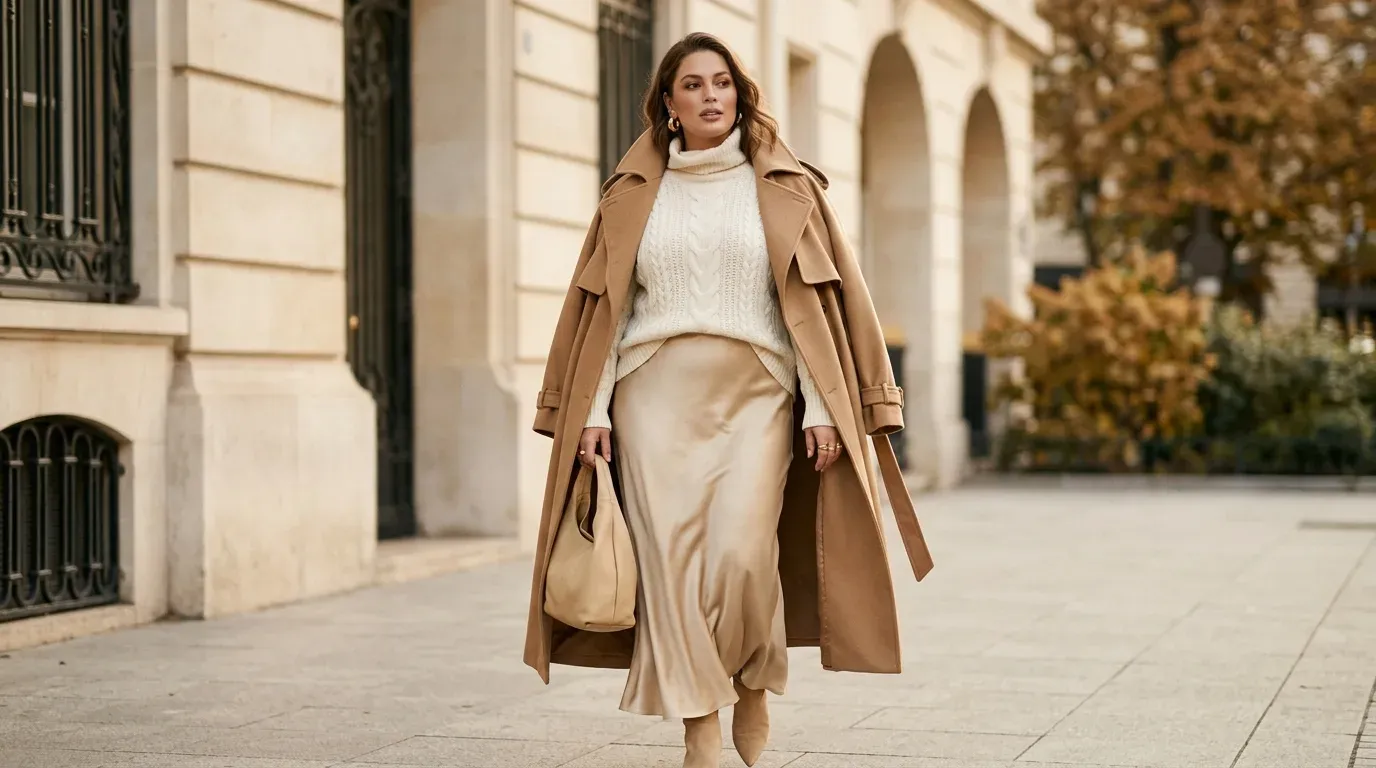
The guide names the mid-length coat, ending at or just below the knee, as the most versatile. It works with both trousers and dresses, and moves easily from the office to dinner.
If you are petite, hip-length styles build easier proportions. If you are tall, a maxi coat finishes your look with one strong line. Puffers that hit at the hip or thigh are generally more proportional than cropped versions, and they offer more warmth too.
Before you commit, try the coat with the shoes and trousers you wear most. A length that looks perfect with heeled boots can read quite differently with flats.
Four Cuts, Four Characters
The tailored coat. Princess or waist seams create shape with no belt needed. Wool and wool blends hold their structure best. If you are making one investment, start here.
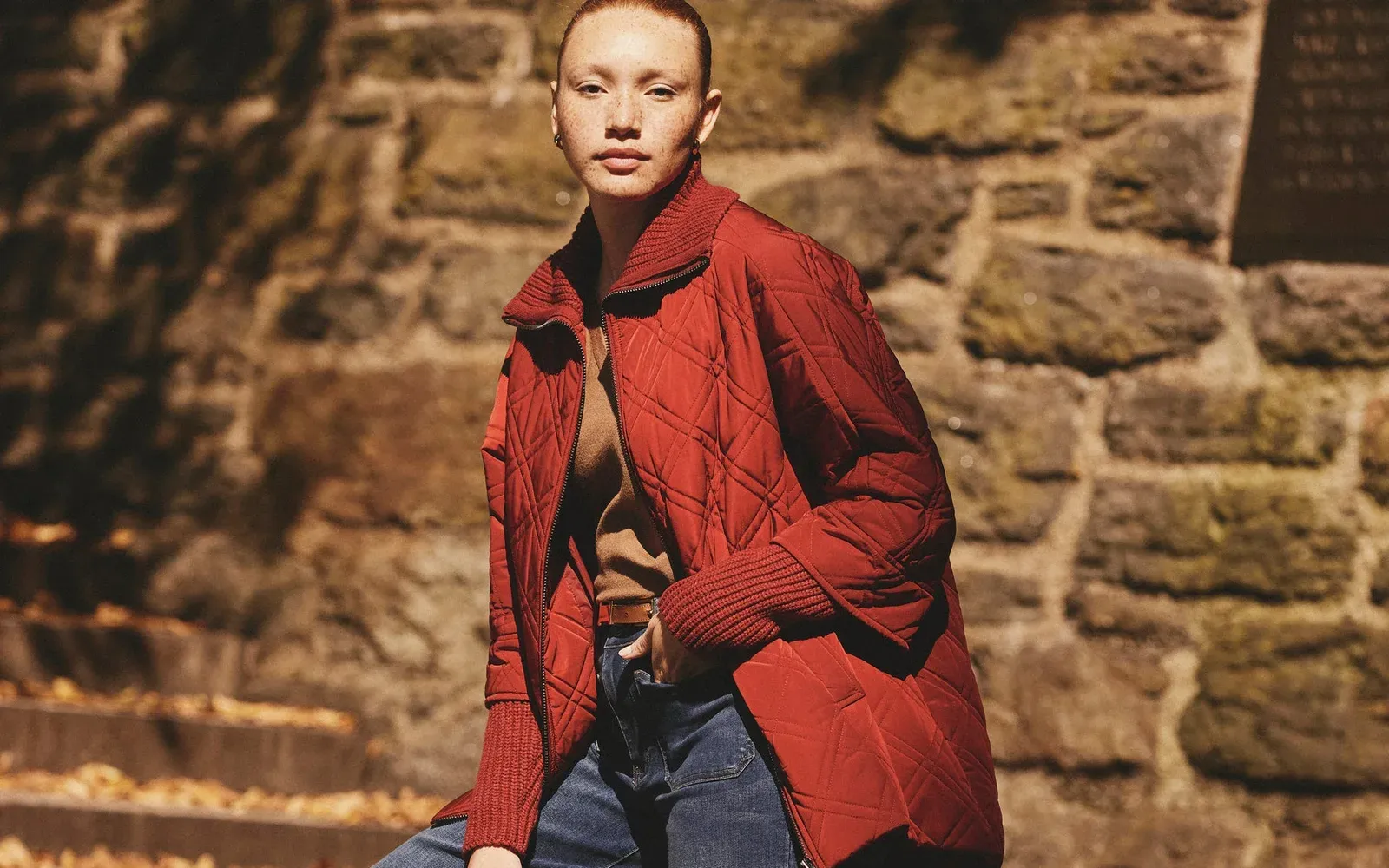
The puffer or quilted jacket. Choose longer styles for warmth and proportion. Use a belt or cinch cord at the waist if there is one; defining the waist instantly refines a voluminous piece.
The trench. Look for a back vent rather than a straight hem, a belt long enough to wrap and tie, and stretch-blend cotton gabardine. The guide finds this more comfortable for everyday wear than traditional cotton.
The oversized coat. It flatters a wide range of bodies, with one condition: shoulder placement and sleeve length must be right. An oversized coat with overly long sleeves looks like a wrong size rather than a choice. Have a tailor shorten them if needed.
Fabric and Fill: Choose for Your Climate
The right fabric depends on where you live. The guide draws a useful distinction:
- Cold, dry climates: Down or synthetic insulation gives the best warmth for its weight.
- Wet climates: A water-resistant shell or treated wool blend performs better, since down loses its insulating power when wet.
- Transitional seasons: An unlined trench or a medium-weight wool coat of around 10 to 14 ounces is enough.
If your winters bring snow, a filled coat will earn its keep. If they bring rain, a water-resistant design is the better buy. Always read the fabric details on the label.
Color and Finishing Touches
If you are buying only one coat, pick a shade that works with most of your wardrobe. Camel, chocolate brown, charcoal and navy are the most dependable. If you are considering a second, a bold red, burgundy or emerald lifts even the simplest outfit.
Buttons make a real difference, too. Swapping the buttons on a plain coat for better ones raises the whole piece for a small outlay. On belted styles, try tying the belt at the side rather than the front; the coat immediately looks more relaxed and modern.
Remember the aftercare. Having your coat cleaned at the end of the season and storing it on a broad-shouldered hanger helps it keep its shape for next winter.
Style Tip: If you are buying just one coat this winter, make it a below-the-knee wool blend in camel. Check the shoulder seam first and have a tailor take in the sides if needed. Wear it over a dark knit and wide-leg trousers, with the belt tied at the waist, and your silhouette will take the lead at first glance.